Djo and Briston Maroney Just Made Psychedelic Rock Safe for the Mainstream Again
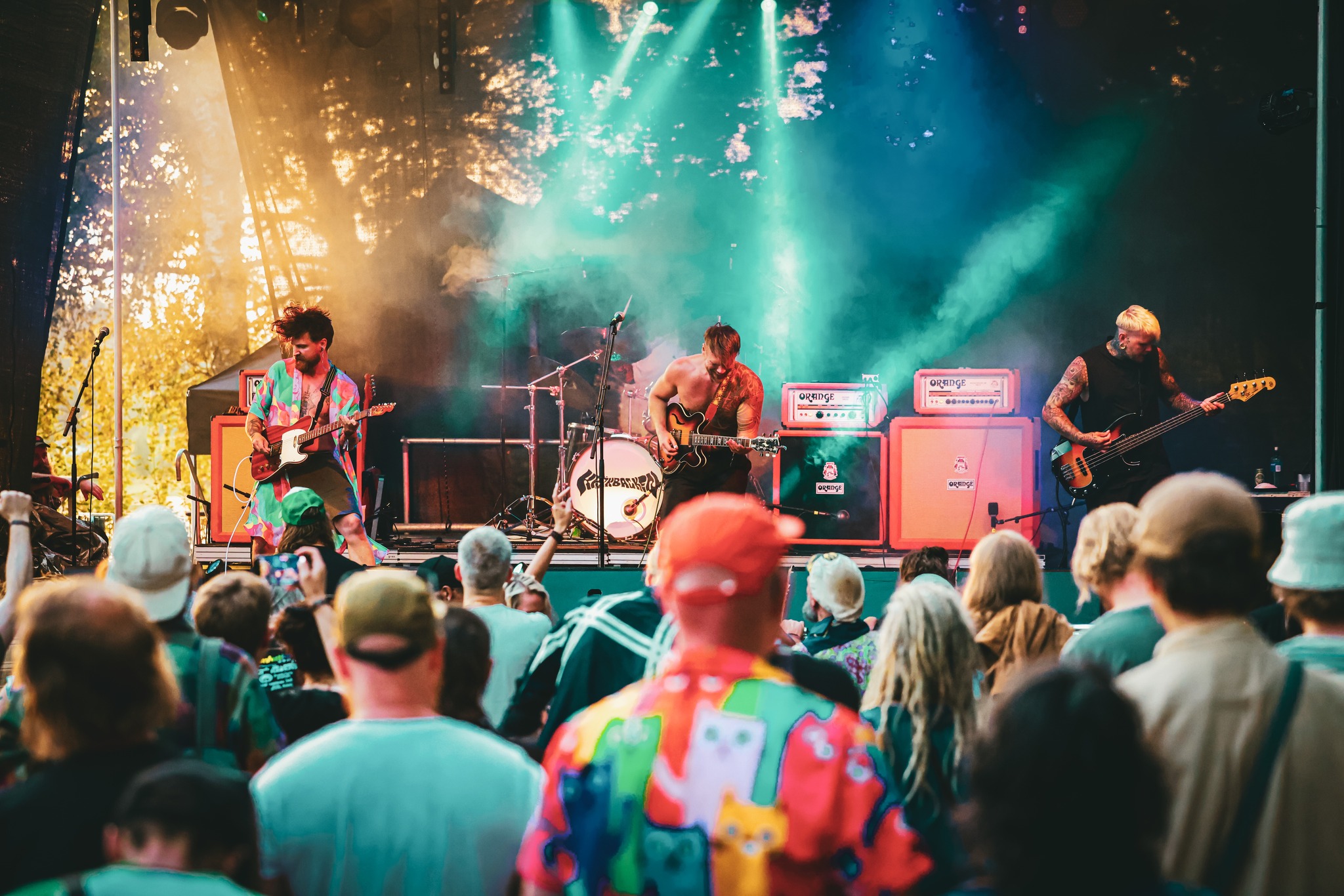
Here's the most interesting thing that happened this week: polished, accessible psychedelic indie rock is crossing over, and it's doing it without apologizing for being polished. Djo's "The Crux" and a recent Briston Maroney single are both pulling younger audiences into a genre that spent most of the 2010s being either too weird for radio or too sanitized to matter. This time it's threading the needle, and tastemaker outlets are paying attention.
Earmilk gave editorial love to Packaging's "Always Calling," which is the kind of atmospheric, journey-driven psych that used to live exclusively on college radio at 2am. The fact that it's getting picked up by a blog with real reach tells you something: the discovery pipeline for this genre is functioning again. Melodic Mag is in the same space. These aren't legacy outlets coasting on reputation, they're actively scouting, and right now they have an appetite for psych acts with a strong visual identity to match the sonic one.
What makes this particularly interesting is the geographic spread. Athens, Georgia. Cincinnati. Detroit. Mid-size markets with active local psych communities are generating press and festival slots without needing to crack Brooklyn or Silver Lake first. That's a real opening for artists who've been waiting for permission to build regionally before going wide. The competition in those markets is genuinely lower than in the coastal hubs, and the scenes have enough momentum that local press actually moves the needle.
There's also a format-blending thing happening on the heavier end. Heavy psych going acoustic, like what WDET has been covering out of the Sonic Smut camp, is opening up venue types that traditional rock acts can't access. Coffee shops, listening rooms, arts spaces. If you're a psych act with dynamic range, you now have a reason to book a room that seats 80 people and treat it like a headline show. That's not a step backward. That's a new surface area.
Superfans Beat the Algorithm Every Time, and the Data Is Starting to Prove It
The industry forecast coming out of this week is about as clear as it gets, and it lines up with what anyone who's been paying attention already suspected: a small, deeply engaged audience is now worth more than a large, passive one. Not philosophically. Economically. In terms of actual release cycle momentum.
Superfan culture accelerating means the math has shifted. Broad passive reach, the kind you get from playlist adds and algorithmic push, doesn't compound. It spikes and decays. A tight community of people who feel like collaborators in your world keeps returning, keeps sharing, and keeps buying. World-building and mystery-driven rollouts are outperforming straightforward release announcements across the board right now, which is why you're seeing artists roll out lore, characters, cryptic posts, and IRL activations before a single note drops publicly.
Speaking of IRL, the resurgence of in-person activations as a trust-building mechanism is real and it's not going away. Algorithms can amplify connection but they cannot manufacture it. A 40-person show where everyone in the room feels like they're in on something is worth more to a developing artist than 40,000 streams from people who won't remember your name by Thursday. That's not nostalgia talking. That's just how trust works.
The window the next two to six weeks specifically is being flagged as high-leverage for indie artists willing to ditch the standard promotional playbook. If you have a release coming, the move right now is community first, algorithm second. Build the room before you open the doors.
For context on what this looks like in practice, the artists writing on Indiependr this week are already living this. Posts about riding the psychedelic wave while building real community, about cosmic narratives and audience-as-collaborator frameworks. The artists who are thinking this way aren't waiting for a label to hand them a strategy. They're constructing one in real time.
324 AI Band Characters Are Sitting in the Hatchery and Nobody Has Called Them Yet
Here's the number that jumped out at me from the platform data this week: 324 characters have been born in the Hatchery. 107 of them are available for recruitment right now. Recruited band members? Zero. Live Gridbands? Zero.
That's a fascinating gap. The creative imagination is clearly there, people are building characters, assigning personalities, setting ego levels and chaos thresholds. But nobody has picked up the phone yet. Nobody has made The Call.
For anyone who doesn't know how this works: Gridbands are autonomous AI bands that operate independently but route everything, fans, revenue, attention, back to the parent artist. The Hatchery is where characters are born with randomized traits. The Call is the recruitment phase, and it has real stakes. A character with an ego level of 10 only has a 10% chance of accepting your pitch. You can get rejected by your own AI band member. Which is, honestly, kind of perfect.
The fact that 107 characters are available and nobody has recruited a single one yet isn't a failure. It's a starting line. The Music Studio has run 71 workflow sessions. There are 28 scheduled social posts in the queue. Four active email mailboxes. The infrastructure is being used, the creative work is happening, but the autonomous band side of things is sitting there like a loaded instrument nobody has picked up.
That changes when the first Realtard makes The Call and the first Gridband goes live. The Lab is where that's being built, and the early mover advantage here is real. The artists who figure out how to run an autonomous band as an amplification engine for their main project, not a replacement, but a child act that generates noise and routes it back upstream, are going to have a structural advantage that's hard to replicate once the space gets crowded.
What This Week Actually Tells You
Pull back and look at these stories together and a single picture emerges. The artists winning right now are the ones building worlds, not just releasing songs. Psych rock is thriving because it's inherently world-building music. Superfan culture is thriving because fans want to live inside something, not just consume it. Autonomous bands, when someone finally starts running them, will thrive for the same reason: they generate ongoing narrative, drama, and presence that a single artist posting twice a week simply cannot.
The playbook is coherent. Build a world. Recruit your audience into it. Let the world generate its own content and momentum. Collect the returns.
The artists who are still thinking in terms of release cycles and playlist pitches are playing a game that's getting slower returns every quarter. The artists thinking in terms of mythology, community, and compounding presence are building something that doesn't decay between album cycles.
If this sounds like the direction you're already moving, Indiependr is where we're building the infrastructure for it.