Here's a number that should embarrass every indie artist who's ever complained about not having time to market themselves: the average major label spends roughly 30% of a release budget on social content creation and scheduling. Not ads. Just content. Just the constant, grinding, never-ending work of showing up online. And independent artists are expected to do the same thing, alone, for free, while also recording, mixing, booking, and somehow sleeping.
That's not a sustainable model. It never was. And in 2026, it's finally starting to crack, because AI-powered social automation has gotten good enough to actually help, not just automate mediocrity at scale.
But here's the thing most articles about this topic get wrong: automation is not a content strategy. It's a delivery mechanism. If you're automating bad content, you're just failing faster and more efficiently. The artists who are actually winning with AI social tools right now are using them to stay consistent while they focus their real creative energy on the stuff that can't be automated, the actual music, the actual relationships, the actual story.
Consistency Is the Whole Game
Ask any artist who's broken through in the last three years what actually moved the needle and they'll almost never say "that one viral post." They'll say consistency. Showing up every week, every release cycle, every season. Instagram's algorithm rewards accounts that post regularly. TikTok's discovery engine is essentially a consistency tax, you pay in volume and it pays you back in reach. Even Spotify's editorial team looks at an artist's social presence before greenlighting playlist consideration.
The problem is that consistency is brutally hard to maintain when you're doing everything yourself. You finish a session at 1am, you're supposed to write a caption about it, find the right clip, resize it for three platforms, schedule it for 7pm Thursday when your audience is actually online, and do it all again in two days. Most artists don't. They post in bursts when they remember, go dark for three weeks, then wonder why their engagement tanked.
This is exactly where scheduling tools with AI content generation earn their keep. At Indiependr, we're already seeing artists use the platform's social autopilot to queue weeks of content in a single session. The 28 scheduled posts currently sitting in the platform's pipeline aren't there because those artists are working harder. They're there because those artists worked smarter once and let the system carry the load forward.
What AI Content Generation Is Actually Good At
Let's be honest about the limits first. AI isn't going to write the caption that makes someone cry and share your song with their entire friend group. That kind of resonance comes from a real human voice, your voice, and no model can fake it convincingly for long. Audiences are getting better at detecting the generic AI post, the one that sounds like it was written by a press release from 2019.
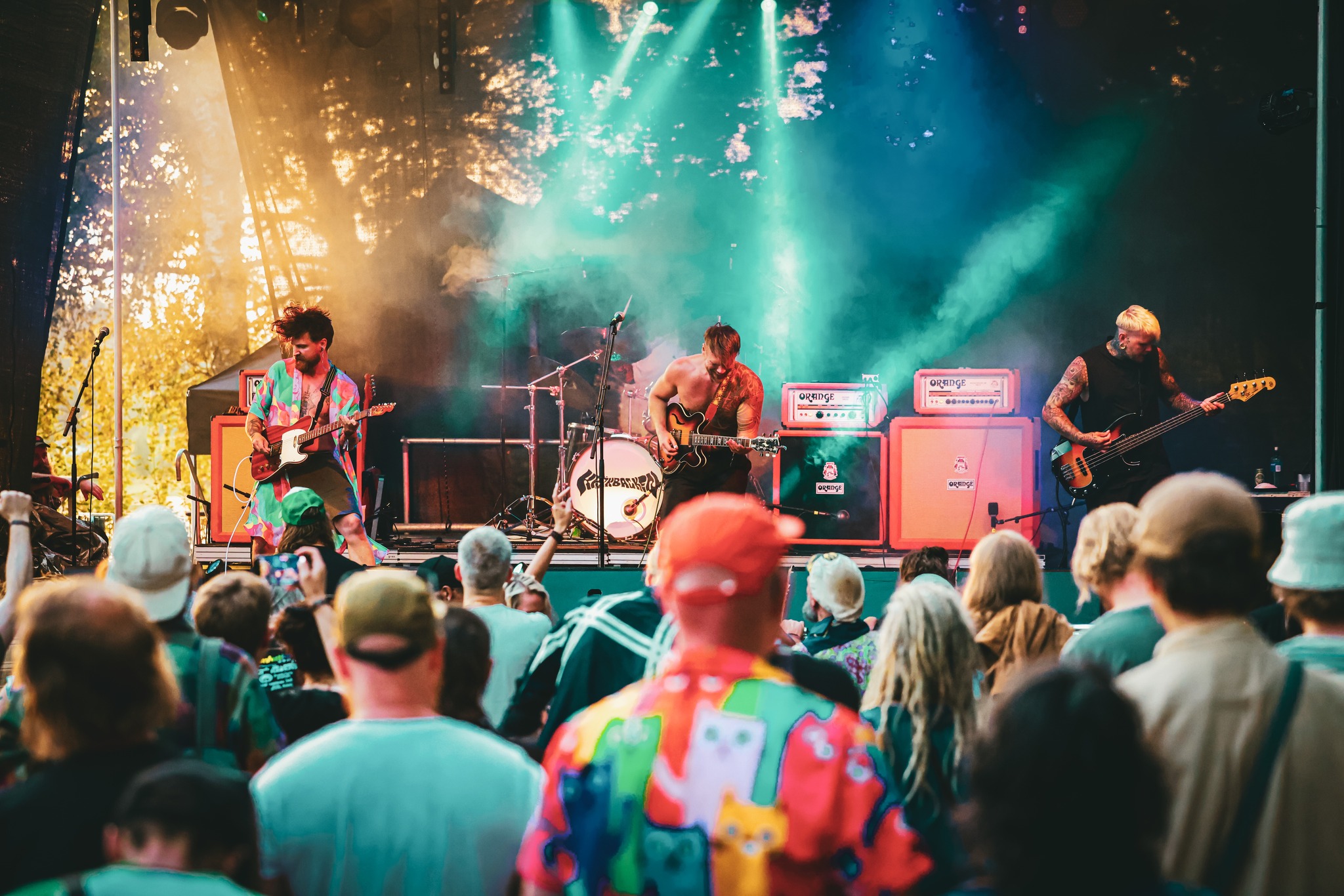
What AI is genuinely good at is the volume work. Variations of release announcements. Show reminders in five different tones. Behind-the-scenes prompts that give you a starting point instead of a blank page. Repurposing a single interview quote into a week's worth of platform-specific content. The psychedelic rock artists currently generating buzz on Earmilk and Melodic Mag aren't getting coverage because they posted more, they're getting it because their visual and sonic identity is sharp and consistent, and AI tools help maintain that consistency without burning out the one person behind the project.
The specific use case that's underrated right now is repurposing. You do one long-form thing, a studio session video, a Substack post, a radio interview, and AI helps you slice it into platform-native content for Instagram Reels, TikTok, Twitter/X, and your email list. The Music Studio at Indiependr has logged 71 workflow runs, and a significant chunk of that is exactly this kind of content transformation work, turning one asset into many without losing the original voice.
Analytics: The Part Everyone Skips
Scheduling and content generation get all the attention, but honestly, the analytics layer is where AI social tools actually justify themselves for serious artists. Not because the data is surprising, but because most artists never look at it at all.
Do you know which day of the week your followers are most active? Do you know whether your audience responds better to studio content or live clips? Do you know if your engagement rate has been climbing or dropping over the last 90 days? Most independent artists have no idea. They're flying completely blind, making gut decisions about content that could easily be informed by a dashboard they already have access to.
AI-powered analytics tools do two things that matter. First, they surface patterns you'd miss in raw data, things like "your posts with questions in the caption get 3x more comments" or "your audience on Instagram skews 18-24 but your TikTok audience is 25-34, so the content strategy should probably differ." Second, they can feed those patterns back into your scheduling and content generation so the system gets smarter over time instead of just repeating the same playbook.
The industry forecast right now is pretty clear: superfan culture is winning. A small, deeply engaged audience is worth more than broad passive reach. That means your analytics goal isn't maximizing impressions, it's finding the 200 people who actually care and giving them reasons to care more. AI can help you identify who those people are and what content keeps them close.
The Trap to Avoid
There's a version of AI social automation that's genuinely bad for artists, and it's worth naming directly. It's the version where you hand over your entire voice to a content generator, post on autopilot indefinitely, and stop engaging with your audience in real time. The algorithm might reward you short-term, but you'll hollow out the actual community underneath the metrics.
The artists building real momentum right now, especially in scenes like the psych communities popping in Athens, Cincinnati, and Detroit, are the ones treating their audience as collaborators. They're doing IRL activations. They're building mystery-driven rollouts where the social content is a breadcrumb trail, not a press release. AI automation handles the infrastructure of that, the scheduling, the consistency, the repurposing. But the strategy, the story, the actual human weirdness that makes people care? That still has to come from you.
Automation buys you time. What you do with that time is the whole question.
Where to Start If You Haven't Yet
If you're starting from zero, don't try to automate everything at once. Pick one platform where your audience actually lives and focus there. Set up a two-week content queue using AI-generated drafts, then edit each one until it sounds like you. Schedule them at consistent times, 7pm on Tuesdays and Thursdays is a reasonable starting point for most music audiences, and then look at the data after two weeks before changing anything.
The goal in the first month isn't to go viral. It's to stop going dark. Consistency first, optimization second, virality is someone else's problem.
The Indiependr Lab is where a lot of this infrastructure is being built out for independent artists specifically, not for brands, not for influencers, for musicians who need marketing support without a marketing team. The tools are getting sharper. The artists using them are getting smarter about how to use them.
If you're still posting into the void and hoping something sticks, there's a better way to do this. Indiependr is where we're building it.