- Tame Impala's 2026 Cycle Is a Free Ride for Psych Artists (If You Move Now)
- Superfan Culture Is Officially Outpacing the Algorithm
- Streaming's Math Is Still Broken and Getting Worse
- World-Building Beats Announcing: The New Release Playbook
- What This Week Actually Tells Us
Tame Impala is about to drop an album. That's the most important thing that happened in indie music this week, and not for the reason you'd think.
It's not important because Kevin Parker is a genius (he is). It's important because every time a genre-defining act does a big release cycle, they lift the entire category with them. Playlist curators start refreshing their psychedelic queues. Blogs that went quiet on the genre start commissioning pieces. Casual listeners who haven't thought about reverb-drenched guitars in two years suddenly want more of that feeling. And most indie psych artists will completely miss the window because they're either not paying attention or they're buried in content creation instead of making music.
That's the thread running through everything this week. The industry keeps creating conditions where the timing is right and the artists are too exhausted to show up for it. Let's get into it.
Tame Impala's 2026 Cycle Is a Free Ride for Psych Artists (If You Move Now)
The Jennie remix of a Tame Impala track has been generating cross-genre buzz, which tells you something important: the psychedelic rock audience is not sealed off from mainstream pop listeners anymore. That wall has been coming down for years, but a K-pop collaboration getting traction is a pretty clear signal that the Venn diagram has meaningful overlap now. Parker has always been pop-adjacent, but this is different. This is active cross-pollination.
Meanwhile, Djo's "The Crux" and Briston Maroney's "Better Than You" are both charting real momentum with polished psych-indie-pop hybrids. These aren't underground acts quietly building cult followings. They're getting mainstream playlist placement. And regional scenes in Colorado, Cincinnati, and Georgia's Normaltown Festival circuit are generating press coverage that would have been unthinkable five years ago for acts at that level.
The problem is that most independent psych artists will treat this as background noise. They'll notice Tame Impala's album dropped, feel vaguely inspired, and go back to whatever they were doing. The artists who actually win from this cycle are the ones who have a single ready to pitch in the six weeks surrounding that release, who have already identified which playlist curators are actively refreshing their psychedelic queues, and who have outreach going out before the wave crests, not after.
Earmilk's coverage of Packaging's "Always Calling" is the proof of concept here. Lo-fi, journey-oriented psychedelic music is getting critical attention without major label backing. The critical infrastructure exists. The audience appetite exists. The question is whether you're positioned to catch any of it.
Pitching playlists in your genre manually is soul-destroying work. You send fifty emails, get three responses, and two of them are asking you to pay for placement. It's why we built the Playlist Discovery and Pitch Engine into Indiependr the way we did. It finds active curators in your specific genre, scores them by how recently they've updated their playlists and how likely they are to actually respond, and manages the campaign so you're not doing data entry instead of writing songs. That window with Tame Impala is real. But it has an expiration date.
Superfan Culture Is Officially Outpacing the Algorithm
The industry forecast data we're tracking right now is pretty unambiguous: a small, deeply engaged audience is generating more momentum per release than broad passive reach. This isn't a niche observation anymore. It's becoming the dominant pattern.
What this actually means for working musicians is that the entire logic of chasing streams and follower counts is increasingly wrong. Not just inefficient. Wrong. The artist with 800 superfans who buy merch, show up to every local date, and share every release to their own networks is in a fundamentally stronger position than the artist with 80,000 monthly Spotify listeners who couldn't name one of their songs.
The industry has known this theoretically for years. The problem is that every platform's interface is still optimized to show you vanity metrics. Your follower count. Your stream total. Your play count. These numbers feel meaningful because they're big and they go up. But they don't tell you who actually bought something, who shared your track to three people, who's been to four of your shows. The fans who drive your actual revenue are almost invisible in standard analytics.
I built the Fan Intelligence dashboard on Indiependr specifically because I was tired of not knowing who my real fans were. Not just who listened, but who showed up. The seven-tab analytics breakdown tracks superfan behavior by engagement, purchase history, and sharing activity. When you know who your fifty most valuable fans actually are, you can talk to them differently. You can reward them. You can build something with them instead of broadcasting at a passive crowd.
The artists in our platform right now who are running 68 scheduled social posts aren't just filling a content calendar. They're maintaining a consistent presence so that when the superfans check in, there's something there. Consistency compounds. Algorithms reward it but, more importantly, people reward it.
Streaming's Math Is Still Broken and Getting Worse
Nothing dramatically new broke this week on the streaming front, which is almost the story. The math hasn't changed. Spotify is still paying around $0.003 to $0.005 per stream depending on your territory and listener tier. Apple Music is marginally better. Tidal pays more but has a fraction of the user base. And the major labels, who negotiated the royalty structures that set these rates, are still getting preferential treatment in algorithmic distribution.
Here's what makes it worse: the pro-rata royalty model means that every stream from a major label artist is pulling from the same pool as every stream from an independent. Taylor Swift's billionth stream and your thousandth stream are competing for the same per-stream payout. The pool doesn't grow proportionally with independent artists' contributions to it. And with AI-generated music now flooding DSPs at scale, there are more streams competing for that same pool every single month.
The artists I see actually building sustainable income are doing it by treating streaming as a discovery channel, not a revenue channel. Get found on Spotify. Get them to your website. Sell them a ticket. Sell them a vinyl. That's the funnel. Trying to live on streaming revenue as an independent artist in 2026 is like trying to retire on the interest from a savings account. The math just doesn't work.
We keep the platform fee at 5% on direct ticket and merch sales for exactly this reason. You shouldn't be paying 20-30% to a middleman platform for the privilege of selling to your own fans. Check the pricing breakdown if you want to see what that actually looks like across different revenue levels. The difference is not small.
World-Building Beats Announcing: The New Release Playbook
The forecast data we're seeing this week confirms something that's been building for a while. Mystery-driven rollouts are outperforming straightforward release announcements across the board. Not by a little. By a lot.
The standard release announcement in 2026 looks like this: artist posts a square image with the release date, a link to pre-save, and a caption that says something like "So excited to share this with you." It gets 40 likes, mostly from other musicians. The algorithm buries it. The release comes out and the first-week numbers are disappointing.
The artists getting traction right now are doing something different. They're releasing fragments. Lore. Characters. Visual world-building that makes listeners feel like they're being let into something rather than sold something. The psychedelic genre is particularly well-suited to this because the music already implies a world. You're not selling a song, you're selling a portal.
Briston Maroney's "Better Than You" didn't just appear. Djo's rollout for "The Crux" had layers. These aren't accidents. They're intentional strategies built around the reality that attention is scarce and mystery is one of the few things that still reliably generates it.
The practical problem for independent artists is that world-building takes time and coordination across multiple platforms. You need to be posting consistently in the weeks before a release, maintaining a visual and narrative thread, and doing it without burning out. That's where the Release Commander on Indiependr actually earns its keep. You plan the release once and the AI coordinates the entire rollout: teasers, countdown posts, pitch emails, playlist submissions, press outreach, all from one calendar. You make the creative decisions. The platform executes them.
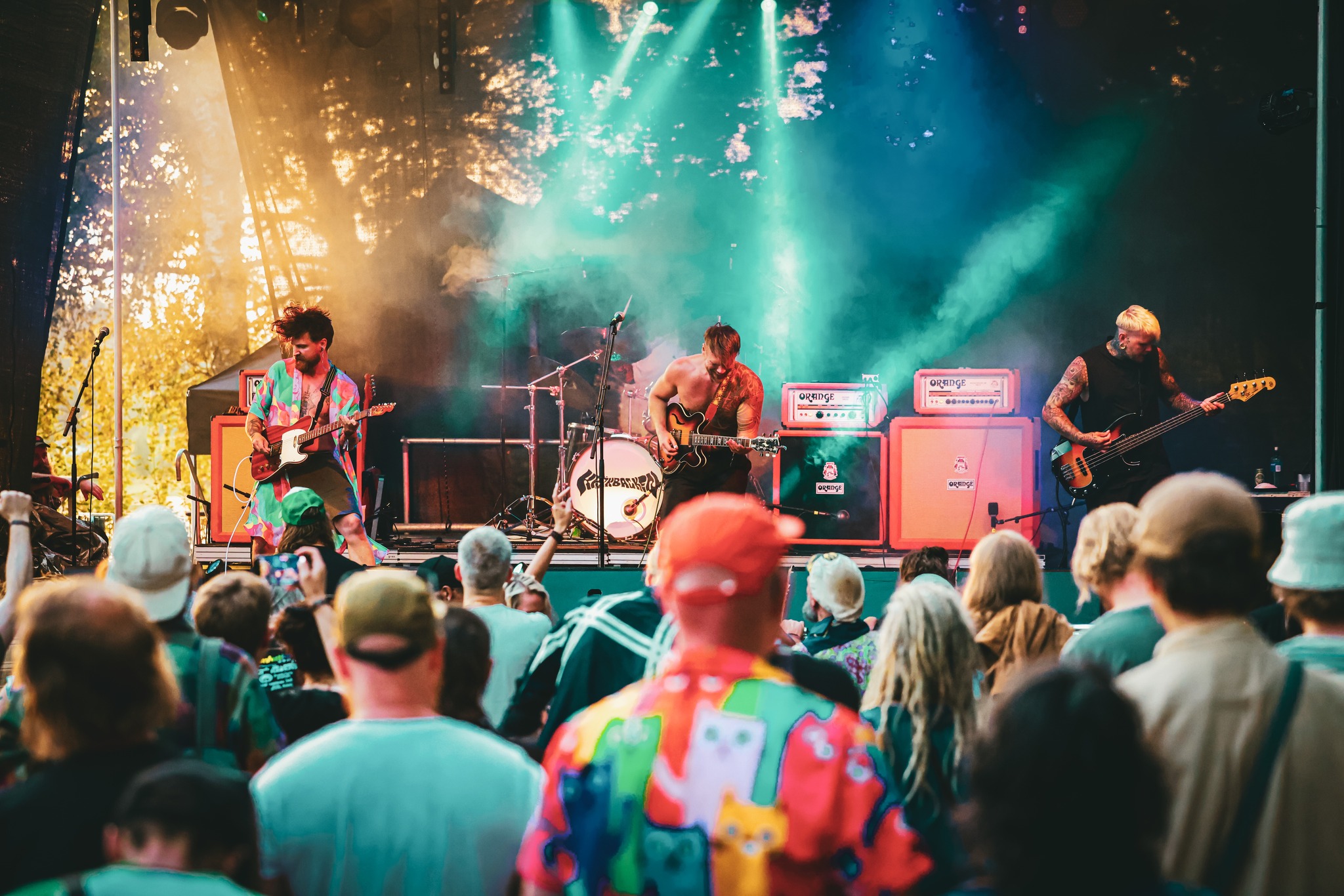
IRL activations are also coming back strong, per the forecast data. Not as a nostalgia play, but because physical presence builds a kind of trust that no algorithm can replicate. A hundred people in a room who saw you play will generate more word-of-mouth than ten thousand passive playlist listeners. The Normaltown Festival coverage out of Georgia is a good example of this. Regional scenes are producing credible acts getting real press, and the common thread is that they're showing up physically in communities, not just posting into the void.
What This Week Actually Tells Us
Pull back and look at these stories together and a pretty clear picture emerges. The industry is splitting into two tracks and they're diverging faster every month.
Track one: passive distribution into algorithmic platforms, chasing stream counts, hoping to get picked up by a playlist curator who may or may not exist, spending most of your time on content instead of music. This track is getting harder and more expensive and paying less every year.
Track two: building a world, finding your fifty real fans, treating streaming as discovery and direct sales as revenue, showing up physically when you can, timing your releases to real cultural moments like the Tame Impala cycle that's about to crest. This track is getting more viable every year, not less.
The psychedelic rock segment is a useful lens here because it's a genre that has always lived or died on world-building. The artists in that space who are getting coverage right now, from Earmilk to CPR Colorado to regional festival circuits, are not the ones with the biggest promotional budgets. They're the ones who built something worth paying attention to.
The 71 Music Studio workflow runs we've seen on Indiependr this week tell me something too. Artists are making music. That's the thing that should take most of your time. The platform exists so the rest of it doesn't eat you alive. Check the full feature breakdown at indiependr.ai/features if you want to see what that actually looks like in practice, and keep an eye on the Insights blog for more breakdowns like this one as the Tame Impala cycle develops.
The window is open. That's the news.