- The Only Channel You Own
- Why Musician Emails Get Ignored
- Fan Newsletters That Actually Work
- Press Outreach Is Broken. Fix It.
- Booking Emails and the Cold Pitch Problem
- The Infrastructure Question
- Superfans Live in Inboxes
The Only Channel You Own
Instagram can shadowban you on a Tuesday for reasons nobody will explain. TikTok might get banned in your country. Spotify can bury your new single so deep in algorithmic recommendations that your own mother can't find it. And there is genuinely nothing you can do about any of that. You are a tenant in someone else's building, and they change the locks whenever they feel like it.
Email is different. When someone gives you their email address, that relationship belongs to you. No algorithm decides whether your message gets delivered. No platform takes a cut of the connection. You send it, they receive it. That's it. It's almost embarrassingly simple compared to the circus of social media, which is probably why so many musicians treat email like an afterthought and then wonder why their follower counts don't translate into actual ticket sales.
The numbers are not subtle here. Email consistently outperforms social media on click-through rates by a factor of six to one. A person who signs up for your mailing list is, on average, worth roughly four times more to you in revenue terms than a social media follower. And yet I watch artists spend forty hours a week obsessing over Instagram Reels and maybe thirty minutes a month on their email list. If that.
The argument of this piece is simple: email is your most powerful marketing tool as an independent musician, AI makes it dramatically less painful to use well, and the artists who figure this out in the next twelve months are going to have a serious structural advantage over everyone still chasing algorithmic virality.
Why Musician Emails Get Ignored
Most musician emails are bad. Not maliciously bad, just thoughtlessly bad. They show up in inboxes looking like this: "HEY EVERYONE, NEW SINGLE OUT NOW, LINK BELOW, ALSO WE HAVE A SHOW NEXT FRIDAY, HOPE TO SEE YOU THERE." All caps, zero context, no story, no reason to care. It reads like a flyer someone stapled to a telephone pole in 1997.
The problem is usually one of two things. Either the artist sends emails so rarely that when one does arrive, the subscriber has completely forgotten they signed up, and the email feels like spam from a stranger. Or the artist sends emails so frequently and so repetitively that people start filtering them out mentally even when they do open them. Both failure modes come from the same root cause: no strategy, no consistency, no understanding of what the person on the other end actually wants to read.
What fans want from a musician's email list is pretty specific. They want to feel like insiders. They want to know things before the general public does. They want a window into the creative process that they can't get from a polished Instagram grid. They want to feel like they have a relationship with a real human being who makes music they care about, not a content machine that occasionally asks them to buy something.
The artists who understand this, the ones who write emails that feel like a letter from a friend who happens to be in a band, those artists have mailing lists that are genuinely worth something. And when AI enters this picture, it doesn't replace that human voice. It just removes every excuse you had for not showing up consistently.
Fan Newsletters That Actually Work
Let's be concrete about what a good fan newsletter actually looks like in 2026, because the bar has shifted. Fans are sophisticated. They've been marketed to their entire lives and they have finely tuned radar for anything that feels manufactured. The newsletters that work right now are the ones that lean into specificity and weirdness, not polish.
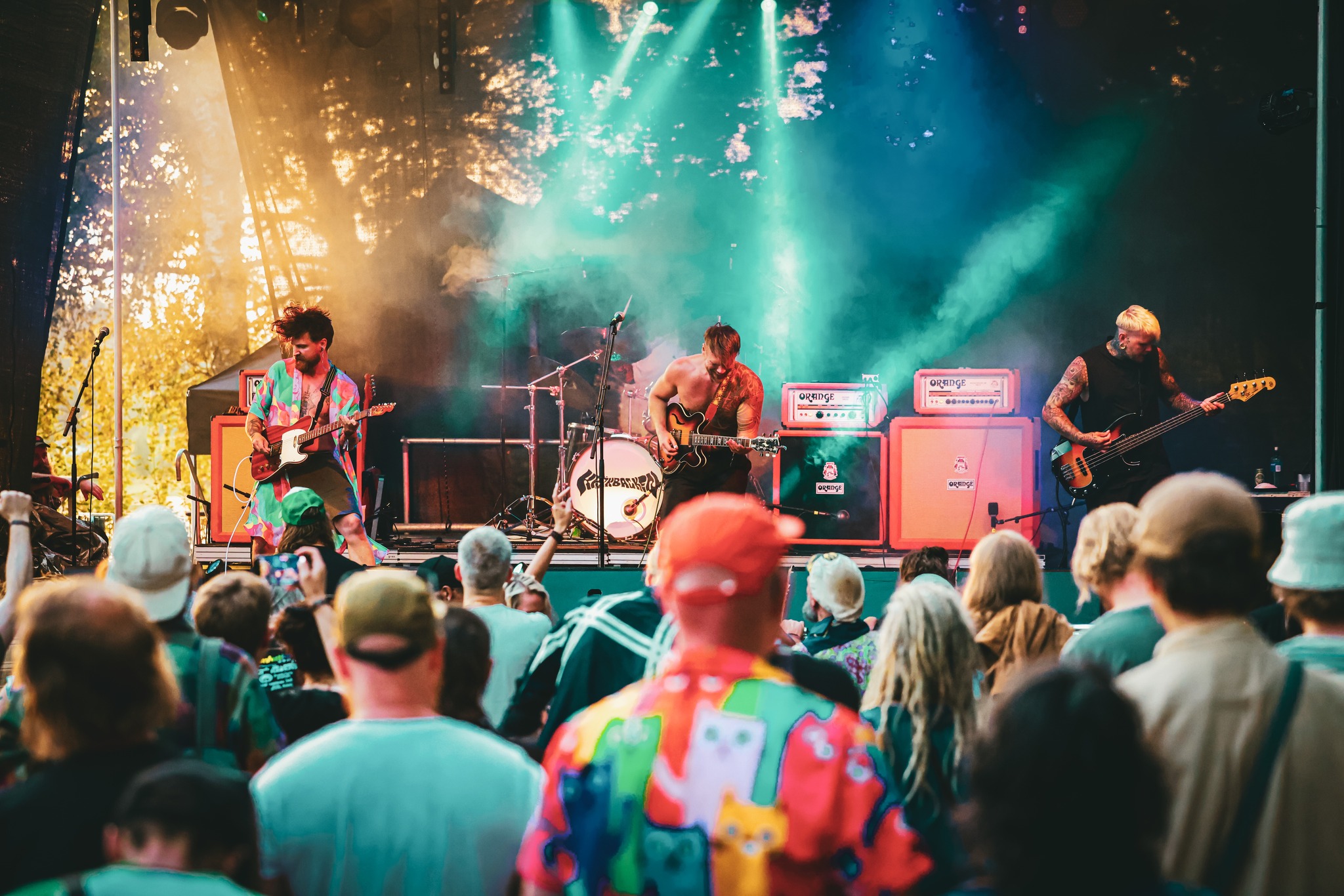
A newsletter from a psychedelic rock artist that opens with "we recorded the new track in a barn in Colorado at 2am and the reverb from the walls made it sound like we were inside a cave" is going to get read. A newsletter that opens with "Exciting news, our new single drops Friday" is going to get archived unread. The difference is not talent. It's just attention to what makes your story interesting.
Where AI becomes genuinely useful here is not in replacing your voice but in solving the consistency problem. Most artists know what they want to say. They just don't have the time or energy to sit down and write it out every two weeks on top of everything else they're doing. Recording, rehearsing, gigging, posting on twelve social platforms, doing their own bookkeeping because they can't afford a manager. The content treadmill is real and it is exhausting.
AI can take your raw material, a voice note about what happened in the studio this week, a few bullet points about what you're thinking about, a draft that's half-finished and kind of embarrassing, and shape it into something you'd actually be proud to send. It can learn your tone over time so the output sounds like you, not like a press release. And it can handle the mechanics: segmenting your list so new subscribers get a different sequence than your long-time fans, timing sends for when your specific audience is most likely to open, and suggesting subject lines that don't sound like every other band's subject lines.
The industry forecast right now is pointing hard at superfan culture. A small, deeply engaged audience is worth more than a large passive one. And email is the primary infrastructure for superfan relationships. If you're building that community and you're not showing up in their inbox with something worth reading every couple of weeks, you're leaving the most valuable part of that relationship on the table.
Press Outreach Is Broken. Fix It.
I want to talk about press outreach for a minute because it is one of the most demoralizing experiences in independent music and nobody talks honestly about why.
Here's the reality. A mid-tier music blog gets somewhere between fifty and two hundred pitches a week. Most of those pitches are identical. "Hi, I'm [artist name], I make [genre] music, my new single [title] is out now, I think your readers would love it, here's a link." The blogger reads the first three words and moves on. Not because they're heartless, but because they've read that exact email eight hundred times and there is nothing there to grab onto.
Good press outreach is specific, personal, and demonstrates that you've actually engaged with the outlet you're pitching. It references a recent piece they published. It explains why your music is relevant to their specific readership, not just to music listeners in general. It has a hook, an angle, a reason to care beyond "this exists and I made it."
Writing that kind of pitch for every outlet you're targeting is genuinely time-consuming. If you're doing a proper release campaign and you're pitching thirty blogs, ten playlist curators, and five regional journalists, you're looking at hours of research and writing before you've sent a single email. Most artists either don't do it at all, or they do a lazy version of it, and then they're confused when nobody writes about them.
This is exactly the problem that Roadie, the AI outreach agent on Indiependr, was built to address. It's not a mail merge tool. It researches the targets, reads their recent coverage, understands what kind of stories they actually run, and writes pitches that are personalized to each one. It's the difference between a publicist who actually does their homework and a VA who sends the same template to everyone. For an independent artist who can't afford the $2,000 to $5,000 a month that a real PR firm charges, that's not a small thing.
The psychedelic rock segment is actually a good example of why this matters right now. Tame Impala's 2026 album cycle is generating renewed listener interest in the genre. Regional outlets like CPR Colorado and Cincinnati CityBeat are actively covering indie psychedelic acts. There's a window here. But you only get to ride that wave if your pitch lands in the right inbox with the right angle at the right moment. Generic outreach won't cut it when everyone's trying to capitalize on the same cultural moment.
Booking Emails and the Cold Pitch Problem
Booking emails are their own special category of pain. Cold-pitching venues is tedious in a way that fan newsletters and press outreach aren't, because the rejection is so immediate and so impersonal. You spend twenty minutes crafting what you think is a solid pitch to a venue, you send it, and you get nothing back. Not a no. Just silence. For weeks.
Part of this is volume. Venue bookers are drowning in pitches. Part of it is that most booking emails are just as generic as press pitches. "We're a five-piece psychedelic rock band from [city], we draw well, we'd love to play your venue." Cool. So do the other forty bands who emailed this week.
What actually works in a booking email is demonstrating that you've done your homework on the venue. What kind of acts do they book? What's their capacity? What's their typical ticket price? What's the audience crossover between their regulars and your fanbase? A booker who sees that you understand their room and have a coherent argument for why your band fits their programming is going to read past the first paragraph. Most bookers have never received an email that good from an artist without a manager.
And then there's the routing problem. If you're trying to put together an actual tour, not just a one-off gig, you need to think about geography, travel costs, show sequencing, and how to cluster dates so you're not driving eight hours between a Tuesday night in Nashville and a Wednesday night in Chicago. Doing that research manually while also writing personalized pitches to fifteen venues is a full-time job.
The artists who are going to win on the touring circuit in the next few years are the ones who treat booking like a data problem, not just a hustle problem. The hustle matters. But if you're spending forty hours building a tour that a smarter system could have built in four, you're burning creative energy that should be going into your music.
The Infrastructure Question
Here's something I think about a lot. Email marketing for musicians has a hidden infrastructure problem that most artists don't even realize they have.
You can write the best newsletter in the world, but if your emails are landing in spam folders, nobody is reading them. Email deliverability is a technical problem, not a creative one, and it's one that most musicians are completely unprepared to deal with. Things like domain reputation, DKIM authentication, SPF records, sender scores. None of that is interesting. All of it matters.
Then there's the data problem. Most artists use a third-party email service that technically owns the relationship with their subscribers. The data lives on someone else's servers, under someone else's terms of service, and if that company changes its pricing or gets acquired or decides your content violates some policy you've never read, your list disappears. The same logic that makes you vulnerable on social media applies to email if you're not careful about where your infrastructure lives.
On Indiependr, we built email infrastructure directly into the platform, not as a bolt-on from a third-party service. There are currently four active email mailboxes running through the system, and the whole point is that your fan data stays yours. It connects to the same analytics dashboard where you're tracking streams, social engagement, and revenue, so you're not trying to correlate data across five different tools that don't talk to each other. When a fan opens your email and then buys a ticket three days later, you can see that chain. That's the kind of insight that used to require an enterprise marketing stack.
The unified inbox piece matters too. If you're managing press inquiries, booking requests, fan messages, and your newsletter replies across separate platforms, you're going to miss things. A booking inquiry that sits in an email account you check every three days is a gig you didn't get. An AI-powered unified inbox that surfaces the important stuff and suggests replies is not a luxury at this point. It's just basic operational hygiene.
Superfans Live in Inboxes
The industry is moving toward a model where a hundred real fans are worth more than ten thousand passive followers. We're seeing this play out in real time. Artists with small but engaged communities are funding records through direct presales, selling out intimate shows, and building sustainable careers without ever touching a major label. The mechanism that makes that possible, more often than not, is email.
Your most dedicated fans will follow you anywhere. They'll read your emails. They'll click your links. They'll share your music with the people in their lives who they think will care about it. But they need a reason to stay engaged between releases. They need to feel like the relationship is mutual. And they need to feel like being on your list gives them something they can't get from just following you on Instagram.
AI makes it possible to maintain that relationship consistently without burning yourself out. It handles the timing, the segmentation, the personalization at scale, the research behind press and booking pitches. What it can't do is replace the thing that makes your music worth caring about in the first place. The story you're telling, the world you're building, the specific weird human that you are. That's still on you.
But if you're spending hours every week on marketing logistics instead of making music, you've already lost the plot. You got into this to create something. The tools exist now to handle the machinery so you can stay focused on the thing that actually matters. The question is just whether you're going to use them.
Your fans gave you their email address. That's a real thing. Don't treat it like a formality.